Use and practice / All our articles
Sage cleansing prayer ritual: how to do it
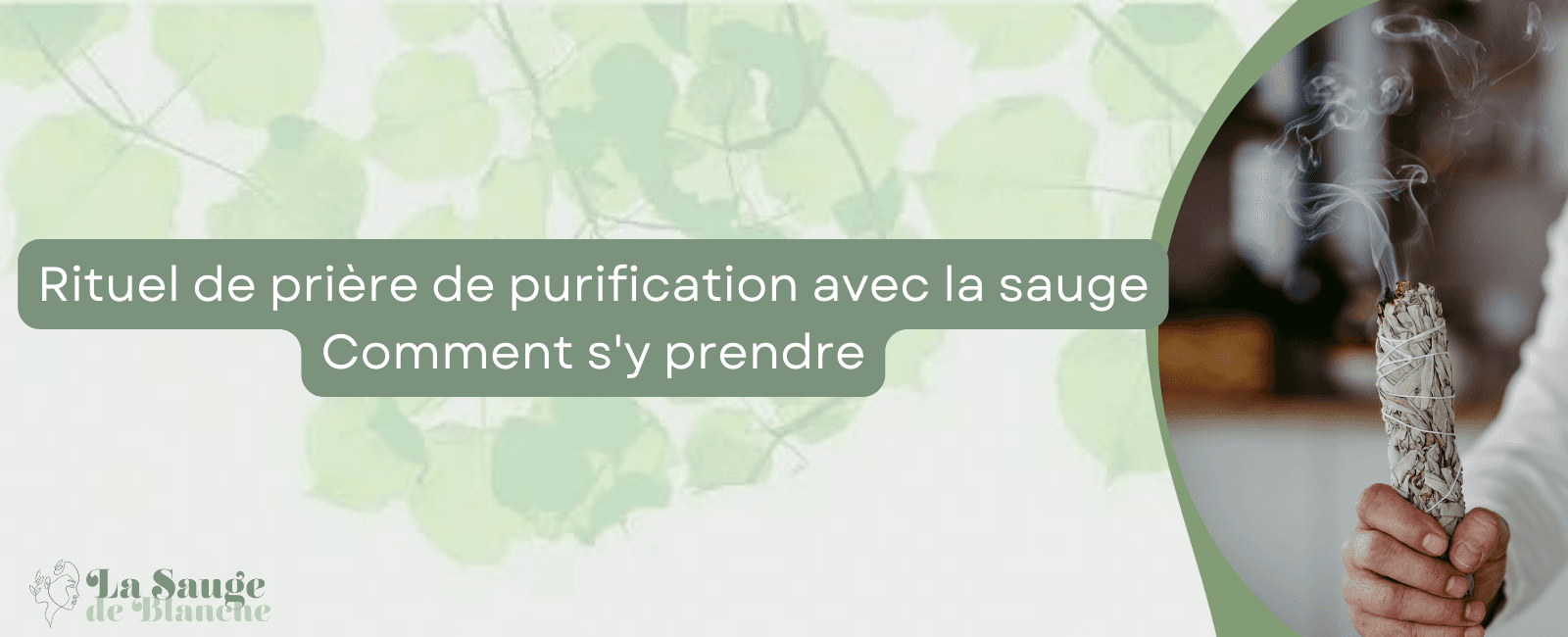
A sage cleansing prayer — also called smudging — means burning dried white sage leaves and moving the smoke over a place, an object or yourself while setting an intention. The gesture is inherited from Native American traditions and is now practised far beyond them. This page brings together the basic ritual, its three variations depending on what you want to cleanse, the smoke-free alternatives, and what you can honestly expect from it.
Where does the sage cleansing prayer come from?
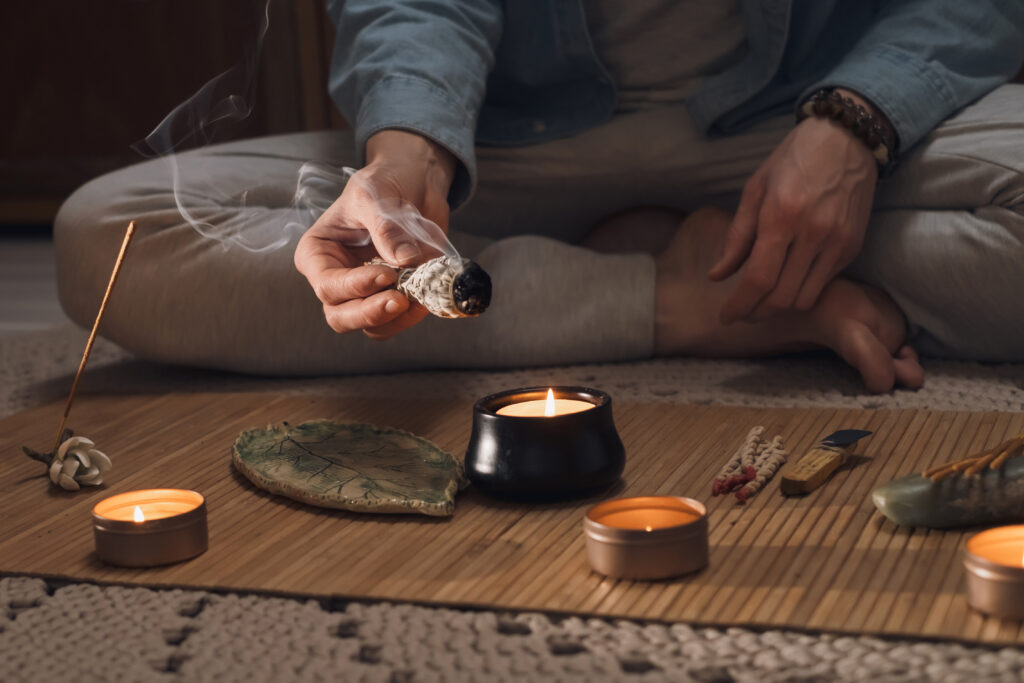
For many Indigenous peoples of North America, white sage (Salvia apiana) is a sacred plant. Its smoke accompanies rites of passage — birth, puberty, marriage, death — healing ceremonies, and prayers addressed to the guardian spirits of a place or to the ancestors. It is never simply a room fragrance there: it opens and closes a ritual time.
Burning an aromatic plant to clear the air is not specific to North America: the same use is found in the Middle East and in Africa, with other resins and other woods. What is specific to the Native American tradition is the framework the gesture belongs to — and that framework deserves respect when the practice is borrowed.
One concrete consequence of this popularity: Salvia apiana is now a species under pressure, as unregulated wild harvesting depletes its populations in California. Choosing sage whose origin is known is part of respecting the practice.
How do you perform a sage cleansing prayer?
The basic ritual is the same whichever variation you choose. It comes down to six steps, and it needs only a sage stick, a flame and a vessel that is safe with heat and embers — an abalone shell, a ceramic bowl or a dish of sand.
- Open a window. This is the most important step of the ritual, and the only one that reduces a real risk: breathing dense smoke in a closed room.
- Tidy and clear the space. Tradition holds that a cluttered place is not cleansed; in practice, it also keeps an ember from falling onto something flammable.
- Light one end of the stick, let the flame catch for a few seconds, then blow it out gently. You are not after a flame but a smouldering ember.
- Hold the stick over your vessel at all times, and move the smoke with a feather or with your hand.
- Set your intention, aloud or silently, and keep it present throughout. It is the intention that distinguishes the ritual from simply burning a plant.
- Close the ritual: put the stick out completely by pressing it into the sand or the shell, check that it has stopped smoking, and do not leave the room before that. Leave the window open for a few more minutes.
A stick does not burn down in one go: once out, it serves for the next time. A 10 cm size easily covers several rituals.
The three rituals, by what you want to cleanse
| Ritual | What it is for | The step that defines it | Duration |
|---|---|---|---|
| The space | A room or a home: moving in, after an argument, a seasonal clear-out | A walk around the room clockwise, corner by corner | 5 to 10 minutes |
| Yourself | Built-up tension: before or after an ordeal or a difficult encounter | The smoke passed along the body, from head to feet | 2 to 5 minutes |
| Meditation | Creating a space for focus before a session | Cleanse the space, then sit and let the smoke settle | The length of the session |
Cleansing a room or a home
- Start from a point you will remember — the doorway, for instance — because you will come back to it to close the ritual.
- Move slowly along the walls, clockwise, directing the smoke into every angle, every nook, under the furniture and inside open cupboards.
- Say your intention as you walk. A simple phrase is enough: may this smoke carry away what no longer belongs here, and leave room for calm.
- Return to your starting point, put the stick out and give thanks — tradition holds that the plant is thanked.
- If any residue is left, gather it and scatter it outside rather than putting it in the bin.
Cleansing yourself
- Sit somewhere quiet, cross-legged if you can, and take a few deep breaths to settle.
- Light the stick and get a smouldering ember as described above.
- Pass the smoke along your body, starting at the top of the head and moving down to the feet, without ever inhaling it directly.
- Keep your intention present: what you wish to set down, and what you wish to find again.
- Put the stick out and stay seated for a minute before getting up.
One rule allows no exception: never cleanse another person, a child or an animal without their explicit consent. With animals the question is first of all a health one — their airways are more sensitive than ours.
Preparing for meditation
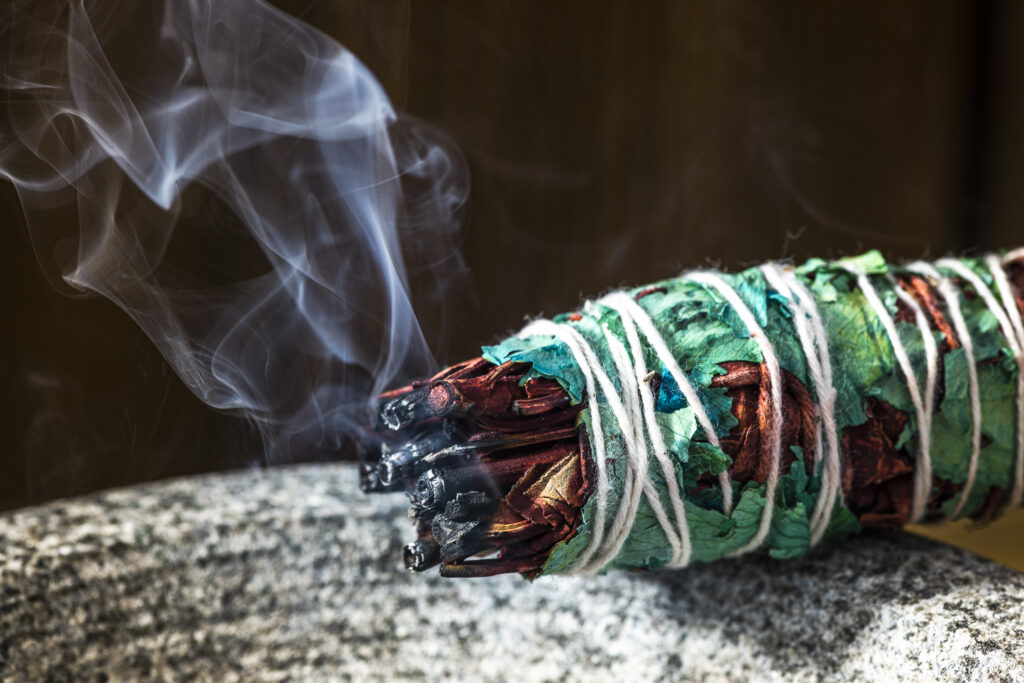
- Set up a quiet corner where you will not be disturbed, with whatever helps you settle: a candle, an object that matters to you.
- Cleanse the space first, briefly, as you would a room.
- Settle in and place the lit stick in its vessel beside you — never on your lap or on fabric.
- Close your eyes, focus on your breathing and let the scent settle without trying to breathe it in.
- At the end, put the stick out and note whatever came to you during the session.
Can you cleanse without smoke?
Yes, and it is the right choice if you are sensitive to smoke, if you live with someone who is, or if you cannot ventilate properly.
The sage bath
- Steep a handful of dried white sage leaves in a pan of hot water for about fifteen minutes.
- Strain out the leaves, then pour the infusion into a bath of hot water.
- Stay in the bath for twenty to thirty minutes, keeping your intention present.
The other options
- Sage essential oil, in a diffuser: it reproduces the scent without the smoke. It is highly concentrated: it must be diluted, and avoided during pregnancy and breastfeeding and with young children. Ask a professional before use.
- Blended sage sticks — eucalyptus, lavender, peppermint — which give off a lighter smoke and a less earthy scent than white sage on its own.
- Palo santo, a South American wood used in a comparable way: light it, let it burn for about thirty seconds, then blow it out and set it in a vessel.
- Dried leaves in a sachet, placed in a cupboard or a drawer, for anyone who wants the scent without lighting anything at all.
What can you really expect from a cleansing prayer?
This needs saying plainly, because many pages do not: no energetic or spiritual effect of burning sage is measurable, and nobody can guarantee you one. What is real is the gesture itself — taking ten minutes, tidying a room, opening a window, putting into words what you want — and the effect of that marked-out time on the frame of mind you carry into what follows.
You will sometimes read that sage smoke cleans the air, kills bacteria or heals a given pain. Those claims do not hold: burning a plant adds particles to the air, it does not disinfect it. White sage does have documented traditional medicinal uses, but they concern infusions or poultices, not the smoke, and they replace no medical advice.
On precautions, the subject is covered in detail in our article on the dangers of white sage: the smoke irritates the airways and the eyes, and people with asthma, sinus conditions or allergies need to be particularly careful. In a closed room the risk is real. With ventilation, the practice causes most people no trouble.
Where to begin
If you have never done this, get a 10 cm white sage stick, on its own or blended with lavender for a milder scent, and a heat-resistant vessel. Do a first space ritual, window open, on a single room. That is enough to tell whether the practice speaks to you — and whether the scent suits you, because it is a dense and very recognisable smoke.