Use and practice / All our articles
Native American cleansing prayers: how and why
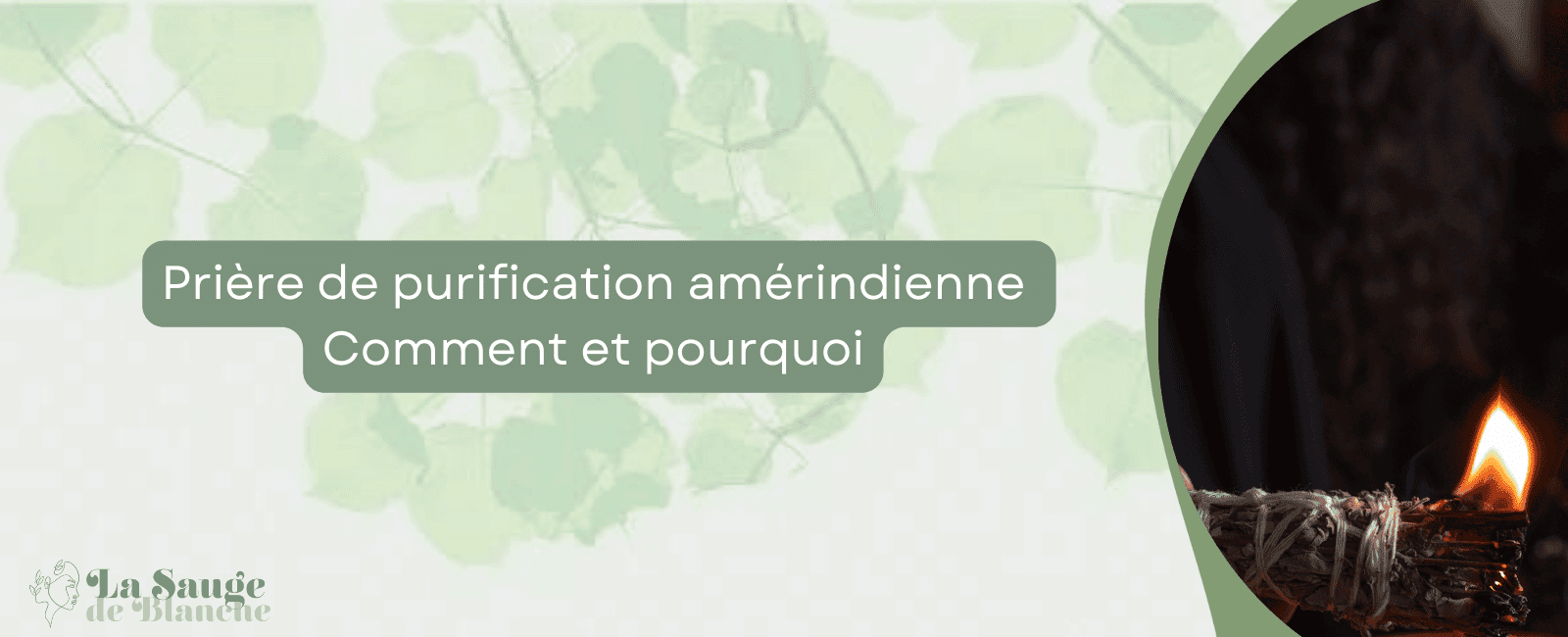
Sage is a sacred plant in some Indigenous North American traditions, where it is associated with healing and purification. Used in cleansing prayers, religious ceremonies and healing rituals, this sacred herb is believed to bring wisdom, peace and protection. Burning sage is traditionally believed to cleanse a space spiritually and drive away unwanted spirits. Claims that burning sage relieves everyday ailments are not established medical benefits.
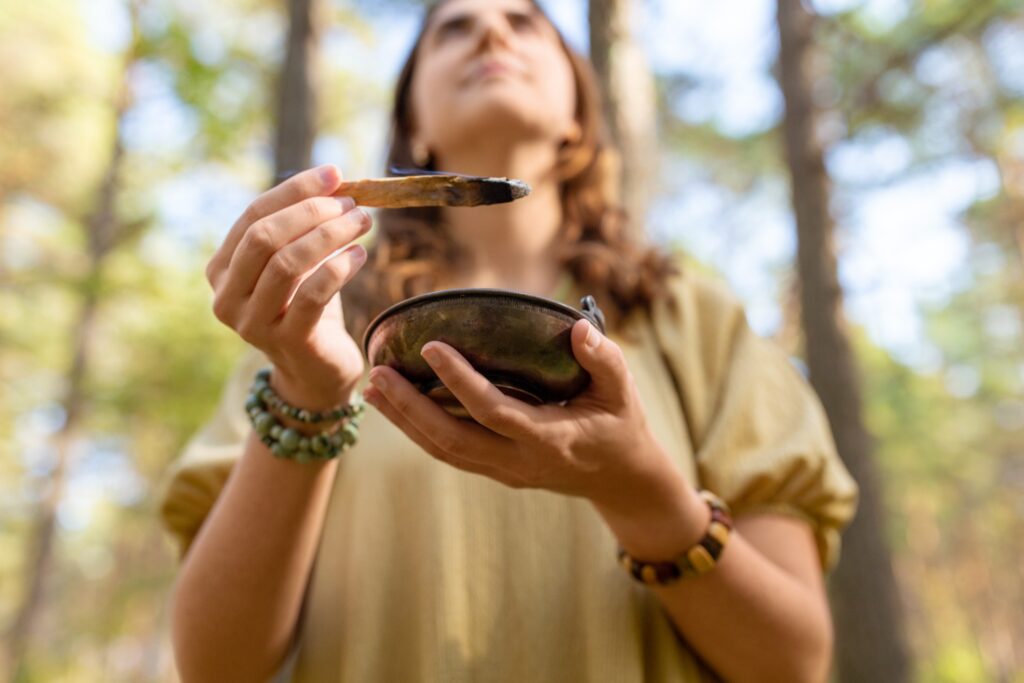
Native American cleansing prayers: the history of smoke cleansing
Smoke cleansing has long been used as a symbolic way to purify a space. It is well known in some Indigenous North American traditions, as well as in the Middle East and Africa. "The original article attributes to the American magazine The Scientist the claim that smoke cleansing is an excellent way to relieve everyday ailments. No identifiable study is provided here, so this claim should not be treated as medical evidence."
These practices involve burning an aromatic plant or herb indoors with the intention of warding off unwanted spirits and negative influences. They are increasingly popular today as a symbolic way to cleanse a room; indoor spaces must remain well ventilated. White sage is associated with purification and often used in cleansing rituals. Antibacterial and antifungal effects are sometimes attributed to it, but burning sage is not an established method of disinfecting indoor air, and claims about spirits belong to spiritual belief. The intentions and effects traditionally associated with a Native American cleansing prayer include:
- Symbolically dispelling negative energies
- Encouraging a sense of well-being in your surroundings
- Changing the scent of a room, rather than eliminating the source of unpleasant odours
- A traditional association with cleansing; smoke does not eliminate damp, mould, bacteria or pests, which require appropriate practical treatment
Some traditional accounts associate sage with relief from pain and inflammation and with treating infections, but these are not established benefits of inhaling sage smoke. The original article states that 90% of participants reported pain relief and more than 80% reported that their symptoms disappeared after just a few sessions; it provides no identifiable study to substantiate these figures. It also describes smoke cleansing as natural and free of side effects, and therefore ideal for chronic pain. That claim is misleading: smoke can irritate the airways, and a ritual should not replace medical assessment or treatment.
How can you prepare a cleansing prayer inspired by Native American traditions?
First, gather suitable supplies for your cleansing prayer. These include a heat-resistant bowl or cauldron, a tripod or another stable support to raise the bowl, incense charcoal, and herbs or resins of your choice. You will also need a way to light the charcoal, such as a lighter or matches. Use only a purpose-made incense burner and follow its instructions; charcoal must never be burned in an enclosed or poorly ventilated space because it can produce carbon monoxide. Once you have your supplies, prepare the place where you will perform the ritual. Clear away clutter and flammable objects, and make sure the area is well ventilated.
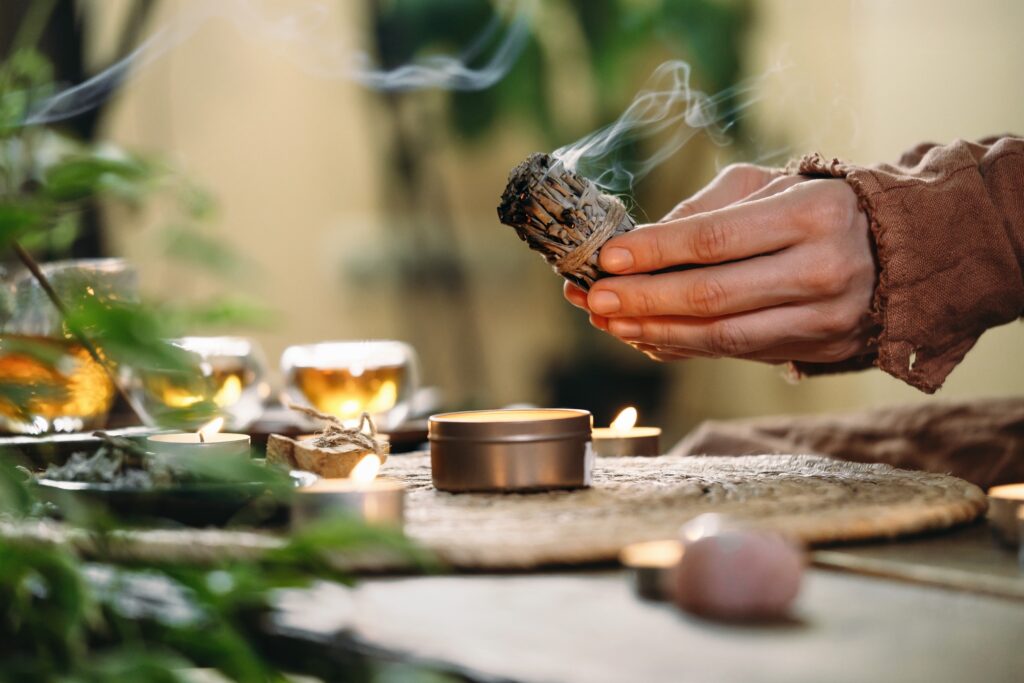
When you are ready to begin, light your bundle of sage and place it in the heat-resistant bowl or cauldron. Add your chosen herbs or resins only if the burner is designed for them. Let a small amount of smoke rise briefly, then use a feather or a hand fan to guide it gently around the space. Avoid inhaling the smoke: covering your nose and mouth with a cloth does not provide reliable protection. Keep burning materials attended and away from children, pets and anything flammable.
Within the ritual, smoke is guided towards the corners of the room with the intention of symbolically cleansing the space and dispelling unwanted energies. Do not fill the room with smoke. When you have finished, extinguish the embers completely and open windows and doors to ventilate the area. Once the smoke has cleared, breathe comfortably and relax. Your cleansing prayer is now complete!
A few tips and alternatives for smoke cleansing
A sage and eucalyptus bundle is sometimes burned in a ventilated space in traditions associated with comfort during a cold. The original article recommends letting it smoke for around ten minutes and breathing it in deeply, but this is unsafe advice and should not be followed. Smoke is not harmless and does not gently cleanse the airways: it may irritate them and worsen respiratory symptoms. A sage and peppermint bundle is another aromatic option, but its smoke is not an established treatment for the respiratory tract either. Palo Santo is also used in spiritual cleansing prayers in some South American traditions; these practices are distinct from the many traditions of Indigenous North America.
Palo Santo is a wood regarded as sacred in some traditions and found in tropical forests in South America. Local communities have used it for centuries in practices intended to spiritually cleanse and protect their surroundings. Palo Santo sticks are straightforward to use and may be burned as part of meditation or prayer.
To burn a Palo Santo stick, light one end with a match or lighter. Let the flame burn for around 30 seconds, then gently blow it out. Place the smouldering stick in a safe, heat-resistant container, such as a suitable bowl or ashtray. Keep the space ventilated, avoid breathing in the smoke, never leave it unattended and extinguish it fully after use.
[products limit="5" columns="5" category="81"]In summary
A Native American cleansing prayer is a spiritual practice intended to symbolically purify a space; claims that it treats ailments should be understood as traditional beliefs, not proven medical effects. Sage is valued in some traditions for its spiritual associations, rather than as a way to guarantee health benefits. Rituals involving aromatic plants have been practised for centuries and are increasingly popular today. Follow safety precautions to enjoy the ritual as a moment of reflection and to welcome what you regard as positive energy, without mistaking smoke for a way to disinfect your home or treat illness.